Who knew football could make RFID easier to understand? Stay with us. There’s a game plan here.
At first glance, RFID can sound like a whole lot of letters and a whole lot of technology. LF, HF, NFC, UHF, readers, encoding… are we tracking inventory or calling random letters? But football makes more sense when you know who’s on the field, what each player does, and what the team is trying to accomplish. RFID works the same way.
RFID, like football, is a team sport. You need the whole crew to play. The players are your tags, the quarterback is your reader, the coach is your software, and the scoreboard is where you see the results. The comparison isn’t perfect, but it gives us a pretty easy way to break down what is happening.
Meet the Players: RFID Tags
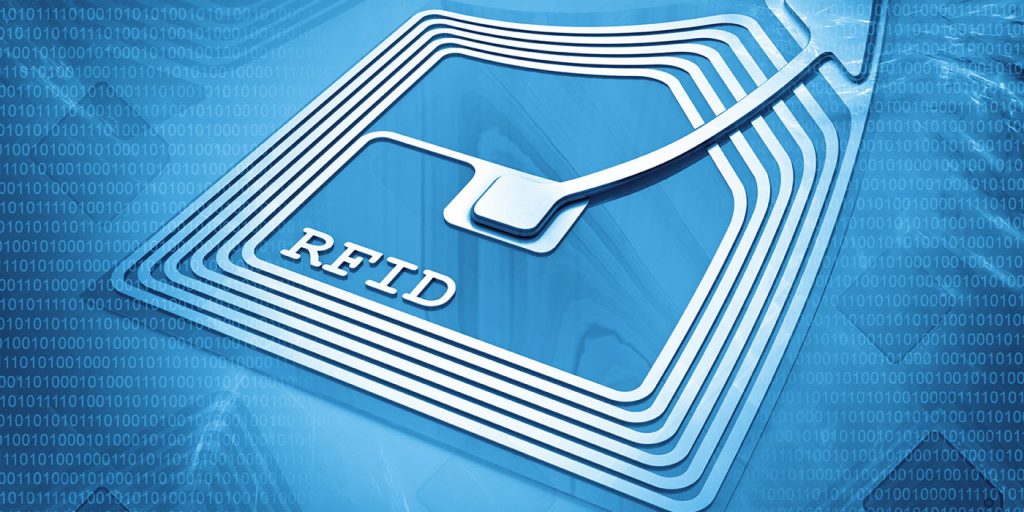
Before you can run a play, you need your players. In an RFID system, the RFID tags are your players. Each tag contains an RFID inlay with an integrated circuit (IC) and antenna that allows it to communicate wirelessly with an RFID reader.
But not every player is built for the same position.
Think about a football roster. A wide receiver, running back, and offensive lineman are all football players, but you wouldn’t expect them to do the same job. RFID tags work the same way. There are different types of tags, different types of materials, different sizes, some with adhesives, and different read ranges. All are dependent on what you are trying to track and where you are trying to track it to.
A tote tag could be your wide receiver, moving through checkpoints across a factory. A library book label could be your running back, handling frequent checkouts and returns. A windshield tag could be your return specialist, recognized whenever a member pulls into the car wash. They’re all RFID tags, but you wouldn’t send them onto the field with the same assignment.
That’s why choosing the right RFID tag isn’t just about picking one and putting it on something. Like football, you have to find the right player for the right position.
The Jersey Number: Data and Encoding
Now imagine trying to watch a football game if every player wore a jersey with no name or number. You might know there are 11 players on the field, but figuring out who is who would be a problem.
That’s where the RFID data and encoding comes in.
An integrated circuit (IC) carries a unique identifier. That identifier can be associated with a software system that includes information about the item, person, asset, or product it represents. Think of it as the player’s jersey number. The number itself isn’t the entire story. But connect that number to the roster, and suddenly you know the player’s name, position, team, and stats.
That’s a close representation of how RFID works. The tag is given its information through encoding, which is like putting the right jersey on the right player before they get onto the field. When the RFID reader picks that tag, it can use the identifier to figure out what it’s looking at and pull the information connected to it. That information helps turn a simple tag read into something useful, to answer questions like: What is it? Where should it be? When was it last seen? What should happen next?
The tags need to have the right information from the start, so the reader and software know exactly what they’re dealing with once the game begins. Just like you wouldn’t want a defensive lineman wearing the quarterback’s jersey.
The Running Plays: NFC, LF, And HF
So, which play do you call?
That depends on how the RFID system needs to perform. For the plays that keep the action closer to the quarterback, we have NFC, LF, and HF. Each has its own characteristics and applications, so let’s start closest to the quarterback and work our way down the field.
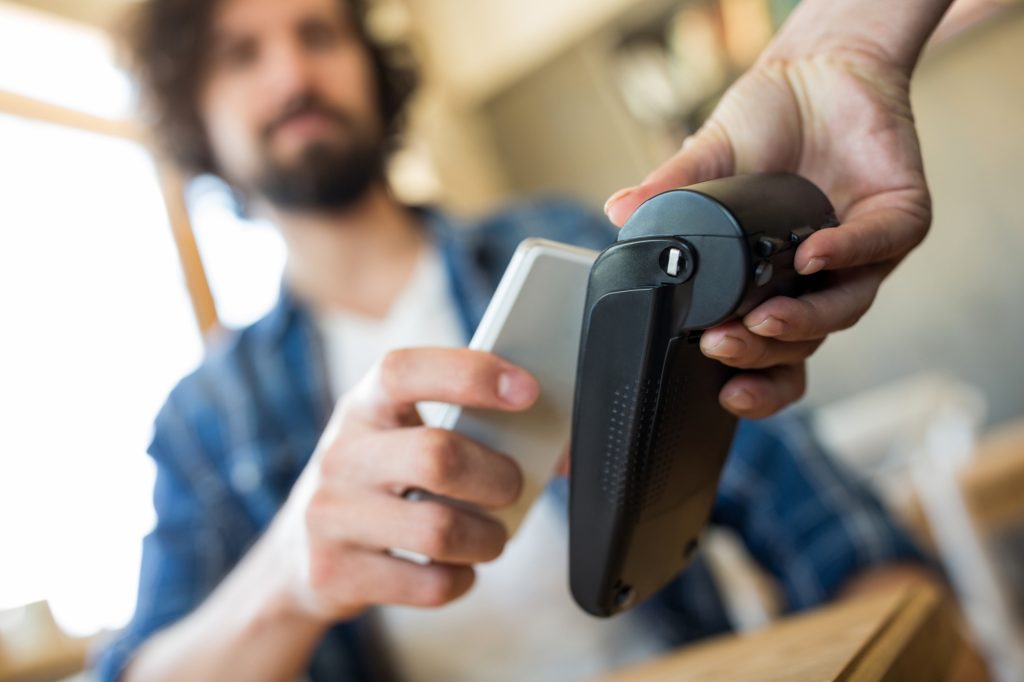
First, there’s NFC, or Near Field Communication, and this is your handoff play. Just like the quarterback handing the ball directly to the running back, the tag and reader need to be very close to each other for that communication to happen.
Next is LF, or Low Frequency RFID, operates at a lower frequency and is commonly used for relatively short-range applications. This of this as your one-yard play, the play needs to be close, controlled and designed for a specific goal.
Moving a little farther down the field, HF, or High Frequency RFID, also operates at a relatively short range. Think of this as your five-yard play. You’re still keeping things close but gaining a little more distance down the field.
The Passing Play: UHF
Then we have UHF, or Ultra-High Frequency RFID, this is our passing play.
Now we’re opening up the field, instead of a one-yard or five-yard play, UHF allows us to cover much more distance. UHF RFID generally has a longer read range than LF and HF, making it best used for applications where you would want to identify or track assets without having to get right next to them.
Think about a warehouse full of products. You wouldn’t want someone walking up to each individual item, finding the barcode, positioning the scanner, scanning it, and then repeating that process for hundreds of more items.
With a system purposely set up for UHF RFID, a reader can identify multiple tags as they move through a read zone.
That’s our passing play. The quarterback doesn’t have to hand the ball directly to the player. The information can travel farther, and the reader can pick up tags as they move through the area.
The Quarterback: Your RFID Reader
So, you’ve got your players. You’ve got their jersey numbers. You know what kind of play you want to run. Now somebody needs to get the ball moving.
Meet the RFID reader.
If the tags are the players, the reader is the quarterback communicating with them on the field. And this quarterback is so good that they don’t always need a clear view of each player. Unlike a barcode scanner, an RFID reader can typically identify a tag without a direct line of sight.
This is when UHF RFID becomes incredibly useful. Instead of lining up every item with a scanner one at a time, multiple tags are identified as they are moving through the read zone. The number of tags read at one time is dependent on the specific RFID system, tag, reader, setup, environment, and application.
The Coach: Turning Reads into Decisions
While the quarterback may be running the plays, there still needs to be somebody understanding what is happening on the field. That is where the coach comes in. In RFID, the coach is the software.
The reader is collecting the information from the tags, but those reads need to go somewhere. More importantly, they need to mean something. The software takes that information and connects it to the larger picture. It can help identify which asset was read, when it was read, where it was read, and what should happen next.
When you see the coach, they are not physically running around the field moving the players themselves; they are strategically watching the game. They are watching what is happening, looking at the whole field, and using that information to make decisions. RFID software works in a very similar way. The reader is collecting the information, and the software helps turn those individual reads into something your business can actually use.
Running the Play: Asset Tracking in Action
Now let’s put everyone on the field. Imagine a factory that moves reusable totes through picking, assembly, quality control, and shipping. The play is simple: move each tote through every required step and out the door. Each tote has a durable UHF tag, our player, with its own jersey number. The frequency is the type of play that gets the tags in the read zone. Readers at key points act as quarterbacks, calling out which tote has arrived. The software, the coach, checks each read against the order’s record.
The important part is that each step is verified before the order moves downfield toward shipping. As the order moves through the process, the team can quickly see which steps have been completed and catch anything that’s missing. If something is missed, it can be caught before the order continues down the field.
When everything goes according to plan and the order makes it through each confirmed step it reaches the end zone. That’s our touchdown. One player cannot make it happen alone; every player has a role in completing the play. In the case of RFID, the workflow was the play that brought the team to victory.
What’s on the Scoreboard?
Finally, we made it to the scoreboard. The scoreboard’s job is to take everything happening on the field and provide you with a way to view the results. That is essentially a simplified version of your asset tracking system. All those tags are being read, data is being collected, readers are communicating with tags, and software is processing the information. But at the end of the day, you probably don’t care to know every individual read happening in the background. You want answers.
Where is the asset? Was it received? Has it moved? Was it shipped? Is it still in inventory? Did it make it where it was supposed to go? That’s what you want to see on the scoreboard.
That’s the point of the whole playbook. Start with the outcome you want, whether it’s faster checkout at a library, smoother access at an event, or verifying an order left the factory. Then choose the tags, frequencies, readers, data, and software that can help your team get there.
RFID On the Football Field
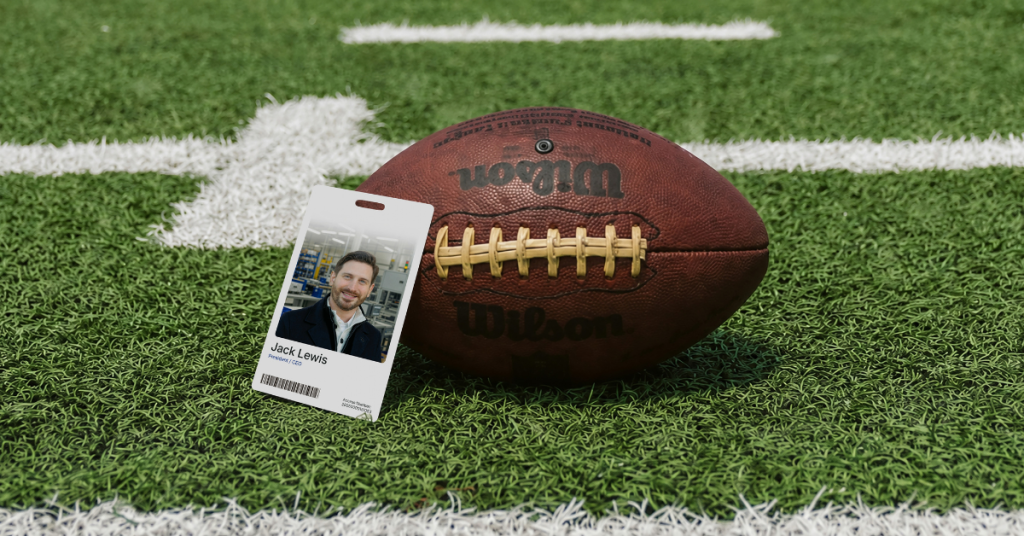
Here’s the fun part: RFID isn’t just a way to explain football. RFID tags are actually inside footballs. In the NFL, tags are in the ball and in players’ shoulder pads, which help follow movement during a play. That data can help show where the ball and players were, how they moved, and what happened on the field.
RFID also has a job behind the scenes. Tags can help teams keep track of equipment, while RFID-enabled credentials can help manage staff access. From the football itself to everything needed on game day, technology helps turn what’s happening in the physical world into useful information.
Now that’s a play worth calling.
Ready to Build Your RFID Game Plan?
Every RFID application requires the right players. From choosing the right frequency and form factor to encoding, testing, and integration, building a successful RFID solution starts with understanding your use case.
At Vanguard ID Systems, our tag manufacturing capabilities and network of RFID partners help bring the right players together for real-world applications. Whether you’re tracking assets, managing inventory, controlling access, or connecting physical products to digital systems, we’ll help you build the right lineup for the job.
Ready to get your RFID project moving down the field? Let’s talk.