

When choosing between a barcode, QR code or magnetic stripe (magstripe) for your cards, start with one question: how will the card be read?
If you already have a POS system, barcode scanner, or magstripe reader, your existing setup will likely help determine which option makes the most sense. If you are implementing a new system, your POS or software provider may have specific requirements or recommendations. And if you haven’t even started implementing a system, that’s okay too! We are here to guide you through the process and help you find the best solution for your business.
Barcodes, QR codes, and magstripes all carry information, but they do it in different ways. Sometimes that information is stored directly in the code or stripe, such as a website URL or identification number. Other times, it acts as an identifier, like a gift card number, membership ID, or discount code, which tells your software what information to access.
The right choice depends on what information you need the card to carry, who will be using it, and what equipment or software will read it.
Magstripes
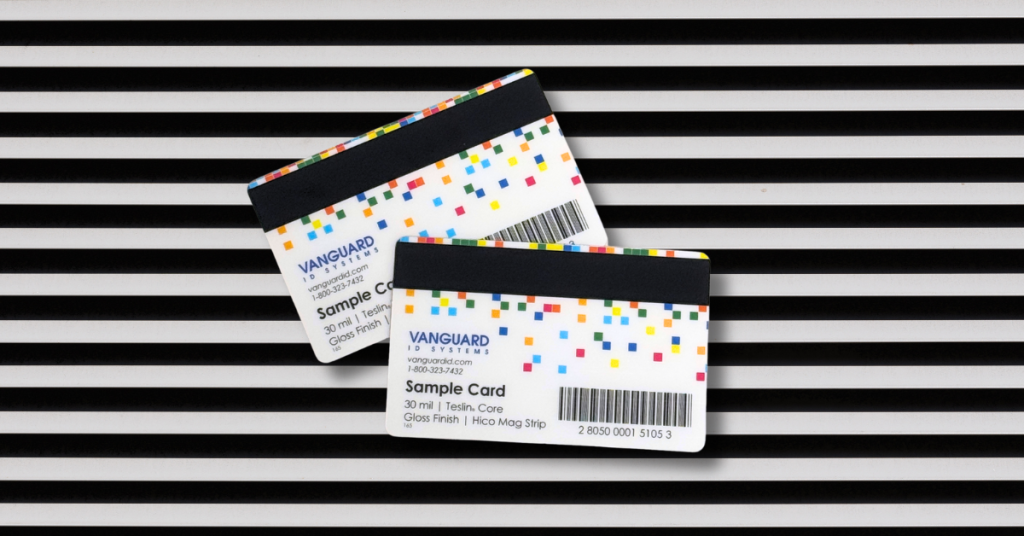
A magstripe is a dark strip found on the back of cards. You’ve probably seen it before on your credit card. Information is saved directly in the stripe’s material and read when the card is swiped through a compatible reader.
Magstripes can be useful for applications where you do not want the encoded information to be easily visible, as the information is stored within the stripe rather than visibly printed on the card.
Magstripes are a widely established technology and have been used on credit cards and identification cards for decades. They can be a practical option for businesses that already have a magstripe reader connected to their POS or card-reading system.
Magstripes are a good fit for:
- Applications where you do not want the encoded information visibly printed
- Gift and loyalty cards
- Membership cards
- Cards used with compatible POS systems
Magstripes are also available in HiCo and LoCo options. HiCo stripes are more resistant to accidental erasure, making them better suited for cards that will be used frequently.
Another important factor to consider is magstripes are applied on top of a card’s lamination, making them more susceptible to damage than a barcode or QR code that is printed underneath the lamination. They are also a specialty material, which can make them slightly more expensive.
Barcodes
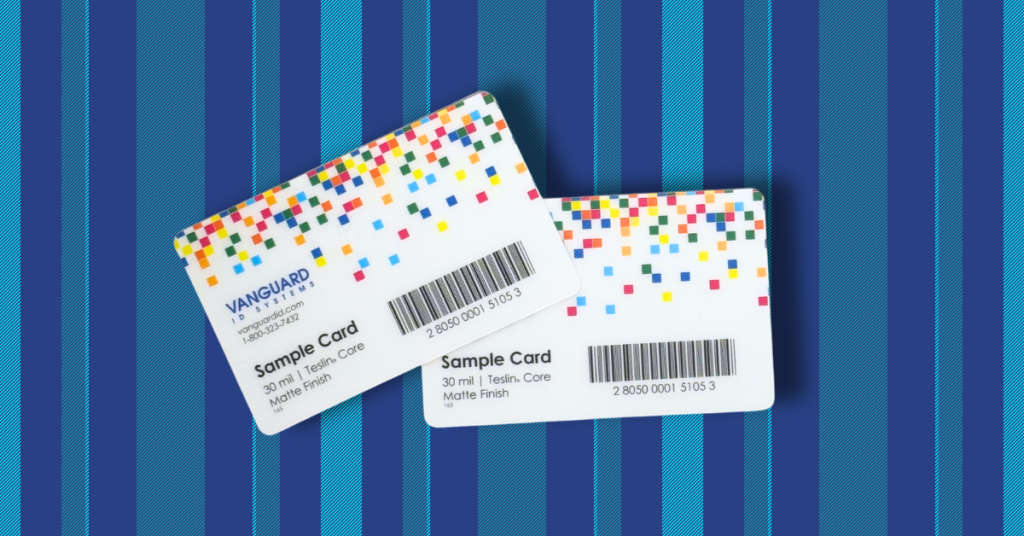
A barcode represents information through a printed pattern that can be read by a scanner. When scanned, the system recognizes the number associated with the barcode and finds the corresponding information.
For example, a gift card barcode typically contains a unique card number that tells the POS system which gift card balance to access. A membership card works similarly by connecting the scanned number to a specific member record.
Barcodes are simple, reliable, and inexpensive to print, making them a strong choice when cards need to be scanned quickly and repeatedly. On laminated Teslin® cards, the barcode is printed underneath the lamination, which keeps it protected from damage.
Barcodes are a good fit for:
- Applications where quick scanning is important
- Gift and loyalty cards
- Membership or library cards
- POS systems that use barcode scanners
- Cards that are frequently scanned by employees
QR Codes
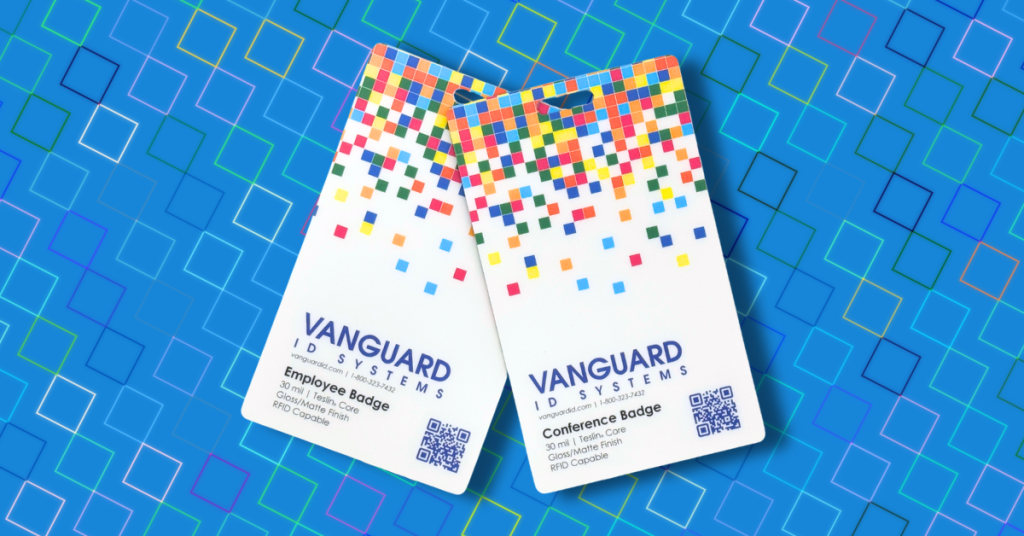
You’ve likely used your phone to scan a QR code before…probably to open a website, menu, sign-up page, or other digital content.
QR codes can be read by most smartphone cameras, as well as some scanners, making them especially useful when you want the person holding the card to access the information themselves.
A QR code can contain information directly, such as a website URL or text, or it can contain an identifier that connects to information stored elsewhere.
They can hold significantly more information than most standard barcodes, making them useful for when you are looking to use a longer URL or include more data. Depending on the type and configuration, some QR codes can hold up to 4,296 characters!
Like barcodes, QR codes are printed underneath the lamination, helping protect them from damage. QR codes also may remain readable even if a small portion of the code becomes scratched or damaged.
Unlike magstripes and barcodes, QR codes are highly customizable. You can change the colors, add logos, use different shapes, and tailor them to your individual brand.
QR codes are a good fit for:
- Applications that require more data
- Linking to websites or digital content
- Customer-facing applications
- Digital experiences
- Registration or information pages
- Content that is consistently changing
- Cards that customers need to scan themselves
- Customization
So, Which One Should You Use?
Start with the system that will be used to read the card.
If you already have a barcode scanner, magstripe reader, or POS system in place, compatibility may narrow down your options right away. If you’re setting up a new system, check with your POS or software provider to see what they support or recommend.
Then, think about who will be using the card and what you want to happen when it is scanned or swiped.
If employees need to quickly scan cards, a barcode may be a simple and reliable option. If customers need to access a website or other information on their own, a QR may make more sense. If your current system already utilizes a magstripe reader, a magstripe may be the best solution.
And you do not necessarily have to choose just one. A card can include multiple technologies, such as a barcode and magstripe or a barcode and QR code. It just depends on how it needs to be used!
At Vanguard ID Systems, we can help determine which option works best with your application and system requirements, so your cards don’t just look the part, they work the way you need them to.