Six months ago, I logged into my co-op interview feeling confident. Camera on, answers ready, thinking… okay, I’ve got this.
And then the CEO asked:
“What do you know about RFID technology?”
I paused, smiled, and said, “Uh… I know it’s how I get into my apartment.”
Not exactly the mic-drop moment I was going for.
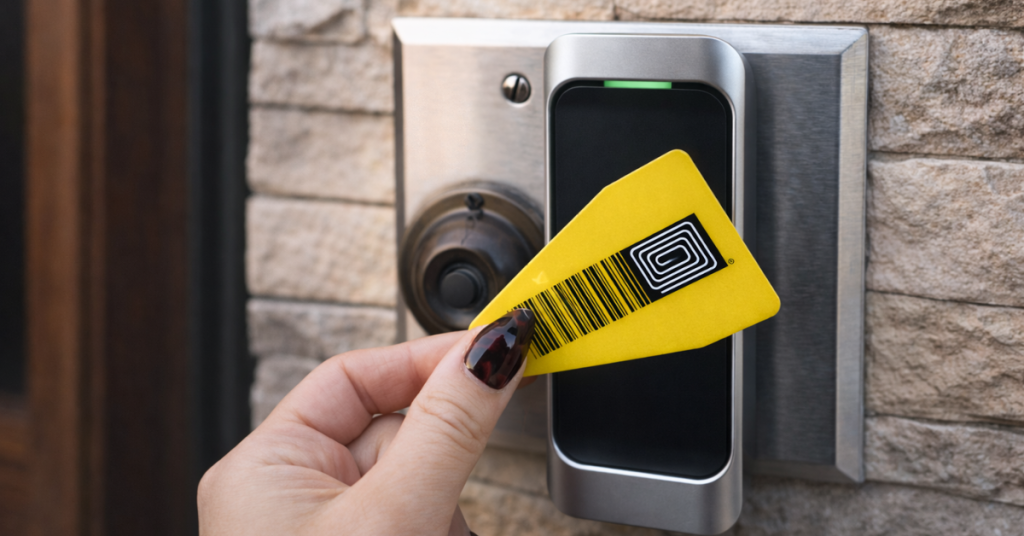
At the time, though, that really was my entire understanding of RFID. It was the technology behind my apartment key fob. Tap the fob, the RFID reader scans it, the door unlocks. Simple, seamless, and something I never questioned. And honestly, even knowing that puts you ahead. Most people use RFID every day without ever realizing it, so if you’ve never thought about how it works, you’re in good company.
But somewhere between that moment and now, I went from “it gets me into my apartment” to actually understanding how RFID technology works, where it shows up, and why it’s everywhere. From getting you into your building, to tracking your online orders, to helping stores know what’s in stock.
So let’s break it down in the simplest way possible.
What Is RFID (And Why Is It Everywhere?)
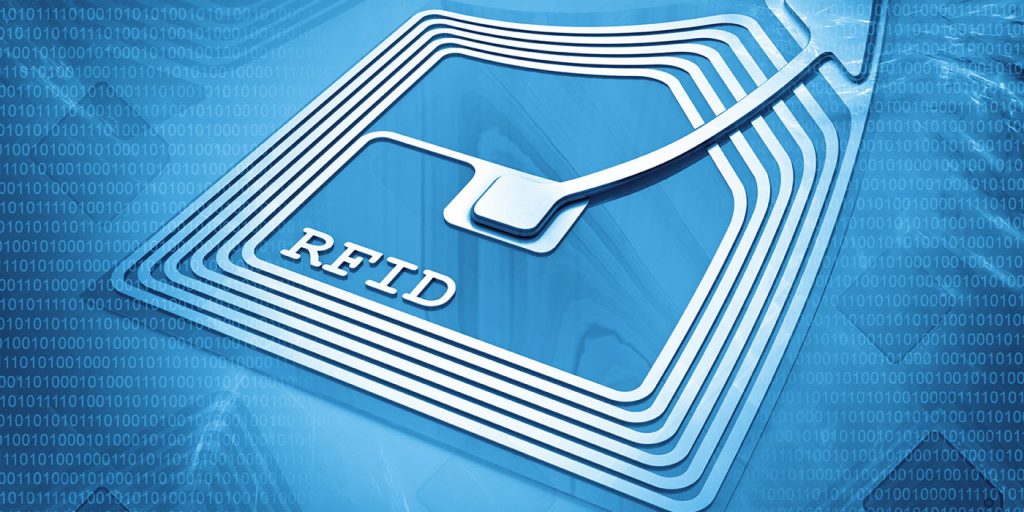
RFID, or Radio Frequency Identification, is a way for things to “talk” to each other using radio waves. (Yes, that sounds vague, stay with me.) At its core, it’s just a quick, behind-the-scenes conversation. One part (the RFID tag) says “this is me,” and the other part (the RFID reader) asks “who are you?” When they get close enough, that exchange happens instantly.
Here’s the easiest way to think about it:
- RFID tag → the thing that says “this is me” (like your key fob, a package, or a clothing tag)
- RFID reader → the thing that asks “who are you?”
When they get close enough, they have a super fast conversation. That’s it.
So when you tap your key fob, the reader asks who you are, and your fob answers. Door unlocked.
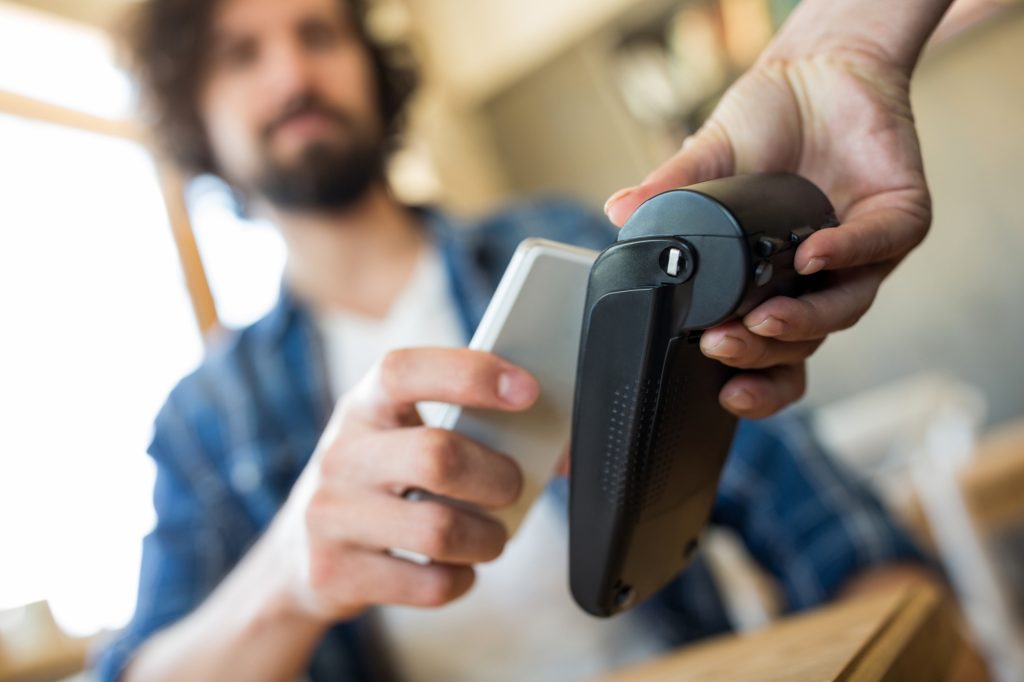
It’s quick, contactless, and a step up from barcodes. RFID can actually be read from farther away depending on the setup, but unlike a barcode, you can’t just snap a picture of it. It requires a real reader, which adds a layer of security.
That’s why RFID technology is used for access control, inventory tracking, asset tracking, and secure systems.
Once you understand it, you start to notice it everywhere. Your apartment, your gym card, your packages, even the clothes you buy.
RFID Access Control Systems: Where My Learning Started
My first real interaction with RFID was through access control, even though I didn’t realize it at the time. That apartment key fob I use every day is part of an RFID access control system. It checks who I am and decides if I can get in. When I tap it, it works instantly.
And once you start thinking about it, it’s not just apartment buildings. RFID access control shows up in offices, campuses, and secure facilities everywhere.
RFID access control is used in:
• Apartment buildings and offices
• Campuses and secure facilities
These systems are short-range on purpose. You have to be close for it to work, which makes it more secure. So no, you can’t just wave your fob from across the room and hope for the best.
The result is simple: fast, secure, and easy access.
At that point, I thought I understood RFID. Turns out, I was just getting started.
RFID Inventory Tracking: How Stores Keep Track of Everything
Once I understood access control, I started to realize RFID wasn’t just about people, it was about tracking things like products, packages, and inventory too. RFID inventory tracking helps businesses keep track of products without scanning each one individually.
Instead of scanning one item at a time (which sounds exhausting), RFID can scan many at once.
RFID inventory tracking is used for:
• Retail stores
• Warehouses
• Online order fulfillment
• Libraries
In real life, this is what that actually looks like:
• Stores can scan an entire rack of clothes at once
• Your package gets scanned at every step on its way to you
• Warehouses can count hundreds of items instantly
• Libraries can check in a stack of books all at once
It’s faster, more accurate, and way less manual work.
RFID Asset Tracking: How Companies Know Where Things Are
Then it clicked even more. RFID isn’t just about counting things, it’s about tracking in real time.
This is called asset tracking.
RFID asset tracking is used across warehouses, stores, and supply chains to monitor where items are in real time. It’s also a key part of IoT (Internet of Things), where everyday objects stay connected and share data automatically.
Some RFID systems can scan from farther away and track many items at once, without needing to stop and scan each one. That’s also how things like parking garages open automatically, toll booths let you drive through without stopping, and car washes recognize your membership as you pull in.
That’s why:
• Your online order updates as it moves
• Companies know where their equipment is
• Inventory gets tracked without slowing anything down
It’s how businesses know what they have, where it is, and where it’s going. And yes, it’s why you keep refreshing your tracking page.
Passive vs. Active RFID: What’s the Difference?
By now, RFID probably feels a lot less confusing, but there’s one more piece that ties it all together: passive vs. active RFID.
The difference is simple: power.
Passive RFID doesn’t have a battery. It only works when it’s close to a reader. This is what’s used in things like key fobs, retail tags, and library books.
Active RFID has its own battery, so it can send signals on its own and be tracked from farther away. This is used for tracking equipment, vehicles, and high-value assets.
In real life:
• Passive RFID = tap your key fob, scan an item, check out a book
• Active RFID = track where something is without scanning it
Bringing It All Together
Looking back, my interview answer wasn’t wrong, it was just incomplete. RFID technology is everywhere, and once you see it, you can’t unsee it. It powers access control, inventory tracking, asset tracking, and the contactless experiences we use every day.
It’s making systems faster, smarter, and more connected, all without us really noticing. And honestly, that’s the most interesting part. It’s been there the whole time.
I just hadn’t seen it yet. But now that I do, I can’t stop noticing it.
This is just the beginning. I’ll keep breaking down RFID technology, RFID systems, and real-world applications in a way that actually makes sense.
So if you’ve ever thought, “I kind of get it, but also… not really,” you’re in the right place.
Follow along, because we’re just getting started.