Cards, labels, key tags, badges, business cards…the list feels endless. Knowing what products are right for your business is hard enough, but THEN you have to decide the material you want.
Once again, the options feel endless… TESLIN®, PVC, paper, PET, BOPP, PS, or PC. Some are cheaper, but others are more durable. Colors show better on some, but with others you can add more advanced features. Some are more environmentally friendly, but others last longer. And the differences matter, especially because your customers will notice and care.
You’re left confused, unsure of what is right for your business and your needs. The good new is…we are here to help! Today, we are going to talk about two of the most common materials, TESLIN® and PVC, and help you decide which is best for your business.
What is TESLIN®?
Bear with me…I know this is going to seem complicated, but I am going to break it down for you.
TESLIN® is a synthetic, polymer-based material often described as a type of synthetic paper. Unlike traditional paper, it isn’t made from wood pulp. Instead, it’s made from durable plastics that resist water and chemicals.
What makes TESLIN® unique is its microporous structure, which allows it to absorb inks and lamination rather than just holding them on the surface. This creates strong internal bonds that improve print durability and lamination strength.
- Synthetic paper: plastic-based, but printable like paper
- Polymer-based: resistant to moisture, chemicals, and wear
- Microporous: absorbs ink and adhesives into the material
Because of this structure, TESLIN® behaves differently from traditional plastics and is often used in applications where durability and long-term performance are important.
What is PVC?
You may have heard of PVC (polyvinyl chloride) before, as many plastic products are made of it.
It is a widely used plastic material made from synthetic polymers. Unlike paper or paper-like materials, it is formed into a solid piece of plastic with a smooth and uniform surface.
PVC is non-porous, meaning it has no tiny openings or internal spaces. Because of this, inks and toners cannot soak into the material. Instead, they stay on the surface.
- Synthetic polymers: man-made materials that create solid plastics instead of something soft or absorbent like paper
- Non-porous: completely sealed, so nothing can absorb into the material
Because of this, PVC is often chosen for its low cost and even, consistent look.
TESLIN® vs PVC: Key Differences
Now that you have a basic understanding of each material and how they’re structured, you’re already through one of the most difficult steps. Let’s look at the key differences that will shape your decision-making process!
Durability:
Durability is one of the biggest differences between Teslin and PVC.
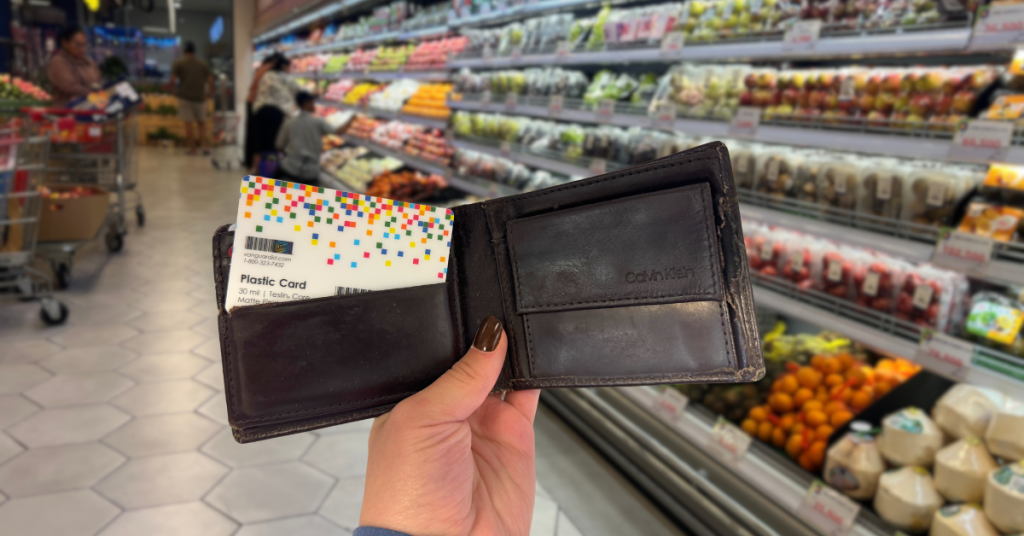
TESLIN® is built to last. Because inks and laminates bond into the material, the final product is more resistant to wear. It holds up better over time, especially in everyday use like wallets or key rings, helping protect barcodes and magstripes and reducing the need for replacement.
TESLIN® also performs well in rough conditions. It is water-resistant, resistant to chemicals, and can handle both extremely high and low temperatures without becoming brittle or breaking.
That said, durability depends on proper lamination. Poor lamination can lead to edge wear or peeling. When done correctly, TESLIN® is more forgiving due to the flexibility added through lamination, making it less likely to crease or crack under stress. It can last up to 10x longer than PVC.
PVC, on the other hand, is a solid plastic that performs well in standard use. However, since printing sits on the surface, it is more prone to scratching and fading over time, especially around the edges. PVC can also crease or crack when bent and may become brittle in colder temperatures, making it less reliable in harsher environments.
Print Quality & Customization:
The way each material interacts with ink impacts both durability and design options.
TESLIN® absorbs ink into the material, which helps lock in graphics and protects them from wear. This makes it a strong choice for applications where design, readability, or security are important. It also prints similarly to paper, allowing for high-quality images, barcodes, and detailed text without requiring specialized processes.
PVC uses surface-level printing, where the design sits on the outside of the material. This allows for clean and sharp results. However, the print is more exposed and can wear down over time.
Additionally, PVC offers more flexibility when it comes to decorative finishes. Because everything is applied to the surface, it works well for specialty techniques like foil stamping, metallic effects, and other visual enhancements that are harder to achieve consistently with TESLIN®.
Even though PVC supports more decorative finishes, TESLIN® products often look and feel more premium.
Cost & Practicality:
Cost is often one of the biggest factors when choosing between TESLIN® and PVC.
PVC is the more affordable option and is frequently used for high-volume production. It’s easy to manufacture, readily available, and works well for standard applications, making it a practical choice when cost is the main priority.
TESLIN® typically comes at a higher upfront cost, especially when lamination is involved. However, it often lasts longer, which can reduce the need for replacements over time and offset the initial investment.
Environmental Impact:
Environmental impact is another important factor when choosing between TESLIN® and PVC.
PVC can release harmful chemicals throughout its lifecycle, from production to disposal, and is difficult to recycle in many systems. It also tends to break down slowly, which contributes to long-term environmental concerns.
TESLIN®, on the other hand, is a more environmentally responsible option. It does not rely on toxic ingredients or the same types of harmful additives. TESLIN®’s makeup consists of less plastic overall, up to 60% less compared to other synthetic materials.
Another key factor is product lifespan. Because TESLIN® products are more durable, they don’t need to be replaced as often. Fewer replacements mean less material being produced, used, and discarded over time. There are environmental benefits to using less material, as reducing plastic use helps lower overall waste and reduce emissions.
When to Choose TESLIN® vs PVC
The best choice depends on how the card or product will be used.
TESLIN® is best for applications that need to last. Because it is durable, flexible, water-resistant, and highly bondable, it works well for products that are handled often or exposed to tougher conditions. It is also a better option when you are looking to be more environmentally friendly.
TESLIN® is a strong choice for:
- Library cards
- Membership cards
- Loyalty or rewards cards
- Key tags
- Gift cards that are repeatedly used
- ID badges
- Event badges
- Labels
- Cards with barcodes or magstripes
- When trying to achieve a more “premium” look
PVC is best for projects where cost, consistency, or specialty finishes are the main priority. Since PVC has a smooth surface, it works well for decorative effects that sit on top of the card.
PVC is a strong choice for:
- Short-term cards
- Promotional cards
- Gift cards for shorter use or with specialty features
- Cards with foil stamping
- Cards with metallic finishes
- High-volume, budget-sensitive projects
In general, choose TESLIN® when durability, flexibility, long-term use, sustainability, and achieving that “premium” look matter most. Choose PVC when you need a lower-cost option or want specialty visual finishes.
What About Other Materials?
While this article focuses on TESLIN® and PVC, other materials are also used in card production, including paper, PET, BOPP, PS, and PC.
Each of these has its own strengths, but they often come with tradeoffs. For example, some may be more environmentally friendly but lack durability, while others may be more cost-effective but don’t hold up as well over time.
For most everyday applications, the choice usually comes down to TESLIN® vs PVC.
Making the Right Choice
Choosing the right card material isn’t always simple, but once you think about your business goals and what is important to you, the choice becomes much easier.
As you’ve seen, each option comes with tradeoffs. Some materials offer lower cost, while others provide better durability, flexibility, or long-term performance. The right choice depends on how the card will be used, how long it needs to last, how you want your customers to perceive you, and what matters most for your application.
As a TESLIN® card manufacturer, we focus on products built to last. We’ve seen how TESLIN® performs in real-world use, especially in applications where durability and long-term reliability matter.
At the end of the day, the best choice is the one that fits your use case, and understanding these differences is the first step.