Schools have a lot to keep track of. Between students, staff, visitors, library books, laptops, classroom technology, and countless other assets, there’s always something moving around campus. While teachers, librarians, IT teams, and administrators all share the goal of helping students succeed, many spend valuable time managing equipment, tracking inventory, checking books in and out, or searching for misplaced devices. These responsibilities are essential to keeping a school running smoothly, but they can also consume valuable time that could be spent elsewhere.
As a former teacher, I know firsthand that these tasks are important. They help ensure students have the resources they need and the schools remain organized, safe, and accountable. But no one gets into education because they love tracking inventory or searching for a missing laptop. Educators want to spend their time teaching, supporting students, and creating meaningful learning experiences. Librarians want to connect students with resources, IT teams want to keep technology running smoothly, and administrators want to focus on improving school operations and supporting their staff. Not chasing equipment or managing endless administrative tasks.
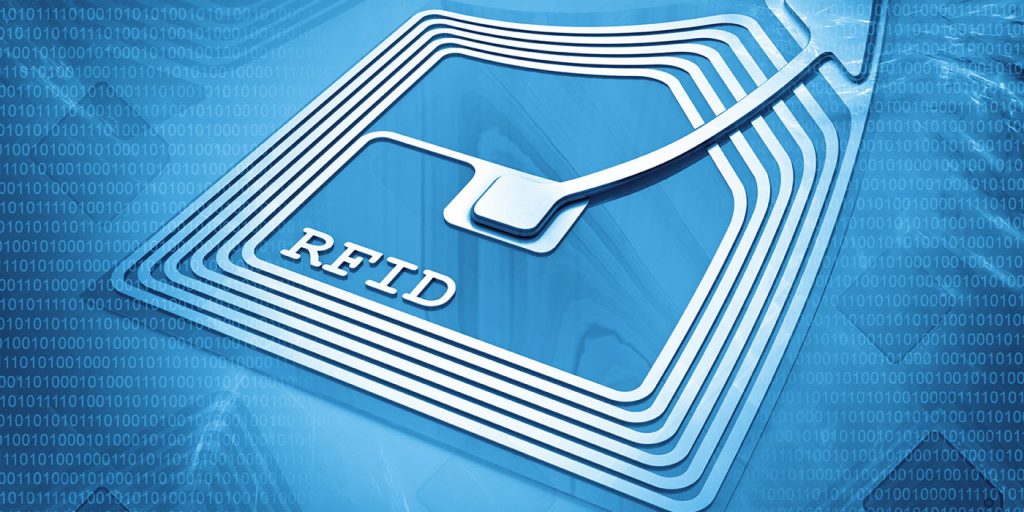
That’s where RFID (Radio Frequency Identification) comes in.
RFID is helping schools simplify everyday operations by automating many of these routine tasks. From improving library management and tracking valuable equipment to supporting campus safety and access control, RFID gives schools better visibility into the people and assets they manage every day.
The less time teachers, librarians, IT teams, and administrators spend on repetitive tasks, the more time they can invest where it matters most: their students. Instead of manually tracking assets or completing time-consuming inventory processes, staff can dedicate more time to supporting students, maintaining technology that enhances learning, strengthening school safety, collaborating across departments, and creating a more effective learning environment.
As technology becomes a bigger part of education, it’s no surprise that more schools are turning to RFID to create safer, more organized, and more efficient learning environments.
Why Schools Are Investing in RFID
Every school district is balancing the same challenge: doing more with limited time and resources.
Teachers, librarians, IT teams, and administrators all rely on systems that help them stay organized, but many everyday tasks are still handled manually. Checking out library books, locating missing laptops, verifying attendance, or managing visitor access can quickly become time-consuming.
Those small tasks might only take a few minutes each but across an entire school year, they add up to countless hours that could be spent supporting students instead.
RFID helps automate these processes, reducing manual work while improving accuracy and visibility across campus.
Some of the most common RFID applications in schools include:
- Student and visitor identification
- Faculty and staff credentials
- Library management
- Asset tracking
- Building and room access control
- Attendance verification
- Event check-in and registration
Rather than replacing the people behind these processes, RFID gives staff better tools to work more efficiently so they can spend more time focused on the students.
Supporting School Safety with RFID
Creating a safe learning environment is one of every school’s top priorities. While RFID isn’t a replacement for security personnel or school safety procedures, it adds another layer of visibility that helps schools better manage who is on campus and where they have access.
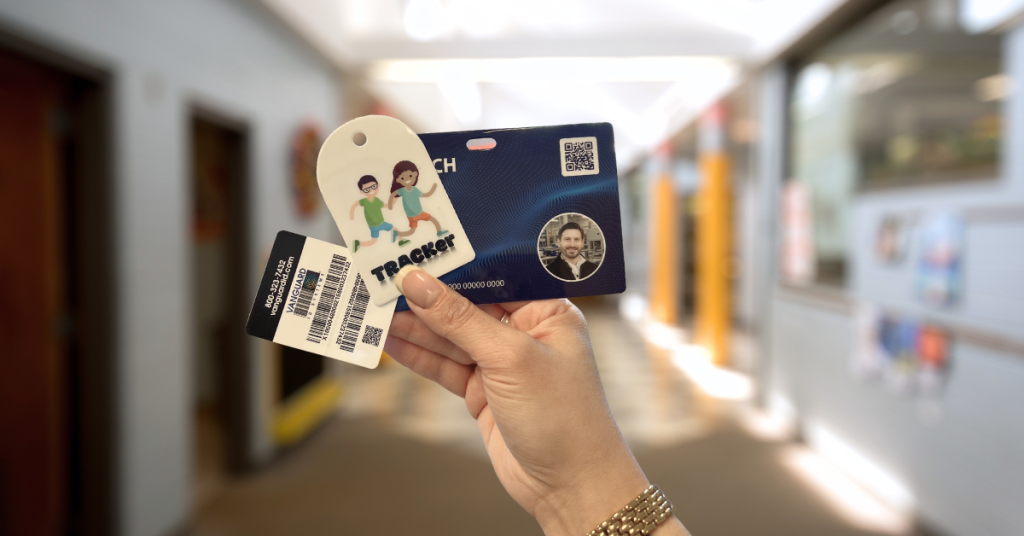
RFID-enabled student IDs. Staff badges, and visitor credentials allow schools to quickly identify authorized individuals while controlling access to designated buildings or secure areas. Instead of relying solely on paper visitor logs or printed badges, schools can use RFID to make identification faster, more consistent, and easier to manage.
Common safety applications include:
- Student ID cards
- Faculty and staff badges
- Visitor badges
- Building and classroom access
- Event check-in
- Attendance verification
When something unexpected happens, having quick access to accurate information matters. RFID systems can create digital records of entries and exits, giving administrators greater visibility without creating additional work for the office staff.
RFID Makes School Libraries Even Better
If there’s one place where RFID has already proven its value, it’s in libraries. As we discussed in our RFID in Libraries blog, RFID is helping libraries improve efficiency while creating a better experience for both staff and patrons.
Traditional barcode systems require each book to be scanned individually. RFID changes that by allowing multiple books to be identified at the same time, dramatically speeding up checkouts, returns, inventory counts, and self-management.
RFID also makes locating materials significantly easier. By placing RFID location markers at the end of every bookshelf or section, staff can quickly scan the library and identify misplaced books, verify exactly how many copies of a title are on hand and where they’re located, and even identify books that have left the library without being properly checked out. Instead of searching shelf by shelf, librarians can quickly pinpoint where attention is needed.
The result is a smoother experience for both students and the staff responsible for managing the library.
Benefits of RFID library management include:
- Faster self-checkout
- Quicker book returns
- Rapid inventory audits
- Easier book location
- Improved collection accuracy
- Less manual scanning
- Enhanced theft prevention
While many schools have dedicated librarians, others rely on teachers or support staff to help manage library operations. Every hour spent checking books in and out, conducting inventory, or locating misplaced materials is time that could otherwise be spent planning lessons, grading assignments, providing individualized student support, or creating meaningful learning experiences. By automating these routine tasks, RFID gives staff more time to focus on the work that directly impacts students.
Instead of spending hours scanning shelves, librarians can spend more time doing what they do best: helping students discover their next favorite book, recommending resources, and fostering a love of reading. As a former teacher, I know firsthand how meaningful those moments can be. Some of my favorite childhood memories were in the library, where librarians would help me discover books that sparked my love of reading. Giving librarians more time to create those experiences for today’s students may be one of RFID’s greatest benefits.
Keeping Track of School Assets
Schools invest thousands, sometimes millions, of dollars in technology and equipment. Laptops, tablets, interactive displays, science equipment, musical instruments, athletic gear, and maintenance tools all move throughout buildings every day. Every misplaced device isn’t just a missing asset, it can interrupt a lesson, delay a project, or create extra work for teachers and IT staff trying to locate it. Keeping track of thousands of assets across multiple campuses can quickly become challenging.
By attaching durable RFID tags to equipment, schools can quickly locate assets and complete inventory audits in a fraction of the time required with manual methods.
The value isn’t just knowing what equipment the schools own, it’s knowing where that equipment is. Whether a laptop is assigned to a classroom, checked out to a teacher, stored in an IT office, or moved between campuses, RFID gives greater visibility into its last known location. That means less time searching for equipment and more confidence that valuable resources are where they’re supposed to be.
Common assets tracked with RFID include:
- Laptops and tablets
- Interactive classroom technology
- Science and STEM equipment
- Musical instruments
- Athletic equipment
- Maintenance tools
The benefits go beyond simply finding missing equipment. Schools gain better inventory visibility, faster audits, improved accountability, and greater confidence that valuable resources are where they need to be.
Turning RFID Data into Actionable Insights with AssetVue
RFID provides schools with valuable location data, but the real power comes from turning that data into meaningful insight. That’s where AssetVue comes in.
Schools manage thousands of fixed assets across multiple campuses, from laptops and classroom technology to maintenance equipment and infrastructure. Each asset contains valuable information beyond its location, including ownership, department, status, purchase details, and other key data that schools rely on every day.
AssetVue brings all of that information together in a centralized asset management platform, allowing schools to manage hundreds of assets attributes while organizing millions of data points into information that’s easy to search, report on, and visualize.
With better visibility into their technology and equipment, schools can:
- Maintain accurate, centralized inventory records
- Know where assets are located across multiple campuses and departments
- Quickly identify missing, misplaced, or relocated equipment
- Conduct fast inventory audits with minimal disruption
- Generate reports that support budgeting, compliance, and operational planning
- Manage the complete inventory from one centralized platform.
For large school districts, inventory management is more than simply counting assets. It’s about knowing what equipment you own, where it’s located. Who is responsible for it and having immediate access to that information when it’s needed. By combining RFID with AssetVue, schools can transform inventory data into actionable insights that improve day-to-day operations while reducing the time and effort required to manage technology across campus.
The Future of RFID in Education
As someone who spent time in the classroom, I know every minute matters. Whether it’s an extra five minutes helping a struggling student, recommending a book, preparing tomorrow’s lesson, or simply being present, those moments make a difference.
That’s what makes RFID so valuable. It’s not just about tracking books, badges, or laptops; it’s about giving educators back time to focus on the people who matter most.
Whether it’s checking out library books in seconds, locating missing laptops, managing visitor access, or tracking thousands of school assets, RFID is helping schools operate smarter, safer, and more efficiently every day.