“Why does that work?”
“How does the card know?”
“Why can’t we just take it?”
And of course… why, why, why?
If you have ever tapped your credit card at the store and immediately been hit with a rapid fire round of questions, you are not alone. Kids are endlessly curious, especially when it comes to abstract concepts. And here is the thing most parents do not realize: your kids are already learning about money long before you ever sit down to teach them.
As a former Montessori teacher, I saw this firsthand. Children learn through curiosity, observation, and repetition. They watch everything you do, especially everyday moments like paying at checkout. They notice that you get things when you tap or swipe, and naturally, they want to understand how and why it works.
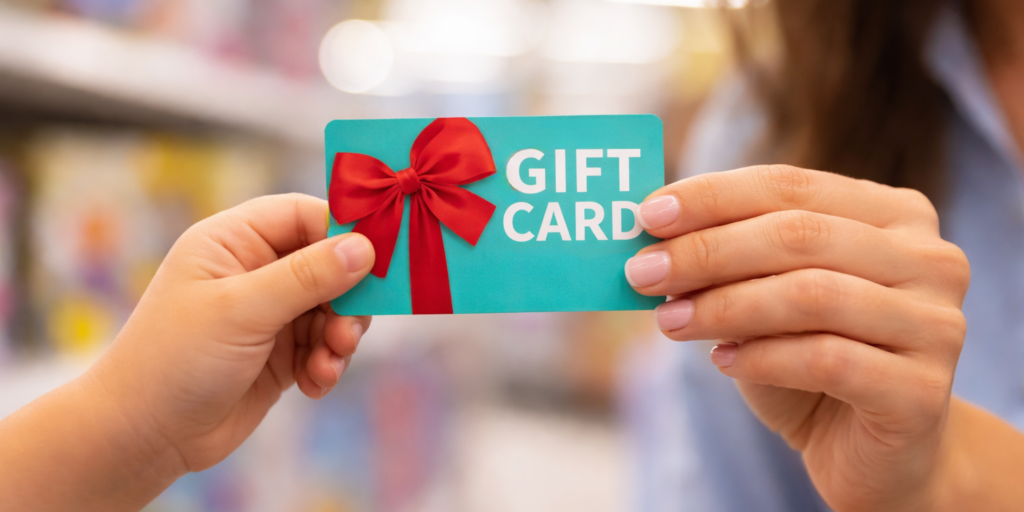
The good news? There’s an easy way to stop answering every “why” and let kids learn through experience, using a tool that’s most likely already in your wallet: gift cards.
Why Gift Cards Work So Well for Kids
Gift cards hit the sweet spot between freedom and structure. Kids get the excitement of spending, making choices, and feeling independent, while parents get built-in limits and peace of mind. While kids get clear boundaries, simple choices, and an immediate connection between spending and value
Instead, money becomes something kids can see, touch, and experience, which is exactly how young children learn best.
With gift cards, shopping becomes a hands-on lesson in budgeting, decision-making, and self-control that feels more like an adventure than a lesson.
Start off Slow
My six-year-old nephew has been learning math in his Montessori classroom and recently became fascinated with credit cards, largely because you can’t physically see the money. To him, it looked like magic. You swipe a card, and suddenly you walk out with toys. Understandably, he wanted answers.
So instead of turning it into a boring lecture, I decided to meet him where he was and use a gift card to make money feel real.
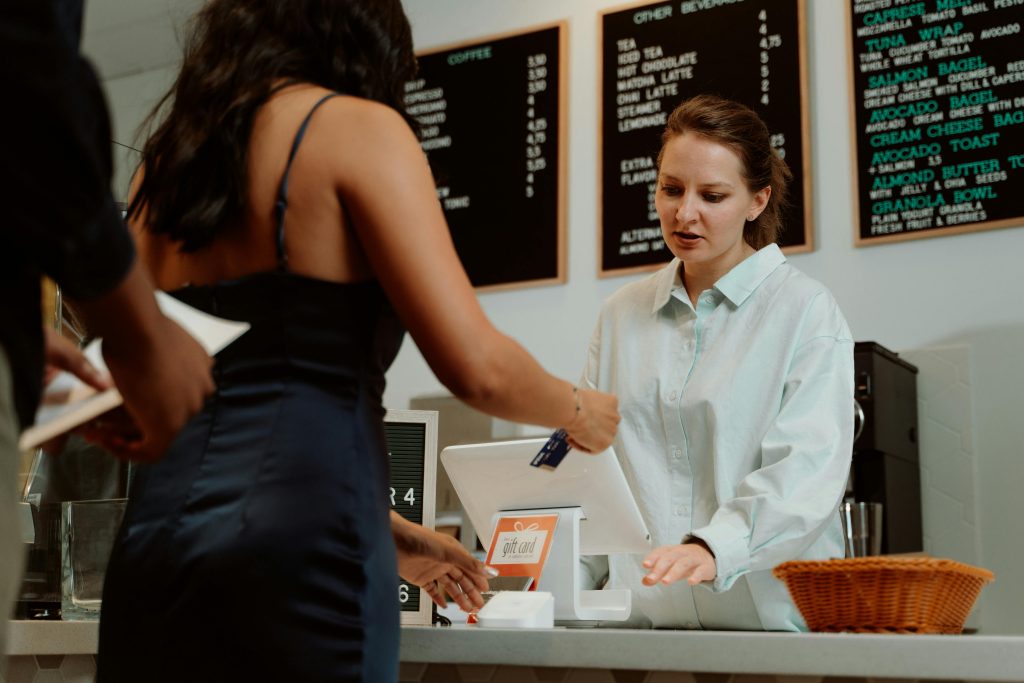
We started at the store with a simple plan. I gave him twenty dollars and let him choose the gift card he wanted. With all the different cards available, he landed on the most colorful card! He proudly carried both to the checkout and handed the cash to the cashier. I stayed quiet and let him watch as she placed the money into the register and scanned the gift card.
I waited, and right on cue, he asked,
“Did she scan the card to put the money in it?”
“Yes,” I said. “Exactly.”
That’s when it clicked. He could see the exchange. Money went in, and value went onto the card. No abstract explanations needed.
Let Them Explore
Then came the best part: shopping.
With the gift card in hand, my nephew slowed down and became more intentional. He checked prices, compared items, and asked thoughtful questions as he moved through the store. Should he buy one big thing or a few smaller ones? How much would he have left if he chose this instead of that? For the first time, he was not just picking out something he wanted; he was thinking through his choices.
I stayed back and let him lead. By giving him that space, he took control of his learning and gradually built his understanding with gentle guidance from me. I watched him pick items up, put them back, and talk through his options out loud. That pause, that moment of decision, was where real learning happened. He began to understand that choosing one thing often means giving up another, and that money is about trade-offs.
By the time he reached the checkout, he felt confident and proud of his choice. He was not just shopping. He was practicing budgeting, patience, and decision making, discovering that learning can be exciting when it feels fun and empowering.
Small Lessons, Big Impact
Teaching kids about money doesn’t have to be complicated or overwhelming. In fact, the most meaningful lessons often come from everyday moments like grocery store trips, choosing a toy, or deciding whether to spend or save. Gift cards offer a simple, hands-on way to make money feel real, understandable, and empowering for children.
By giving kids the space to make choices, ask questions, and learn at their own pace, we’re not just teaching them how money works. We’re helping them build confidence, independence, and decision-making skills that will last a lifetime. And sometimes, those big lessons start with something as small as a $20 gift card.